Inside Res Mythica - Low-Prep Storytelling Through Factions
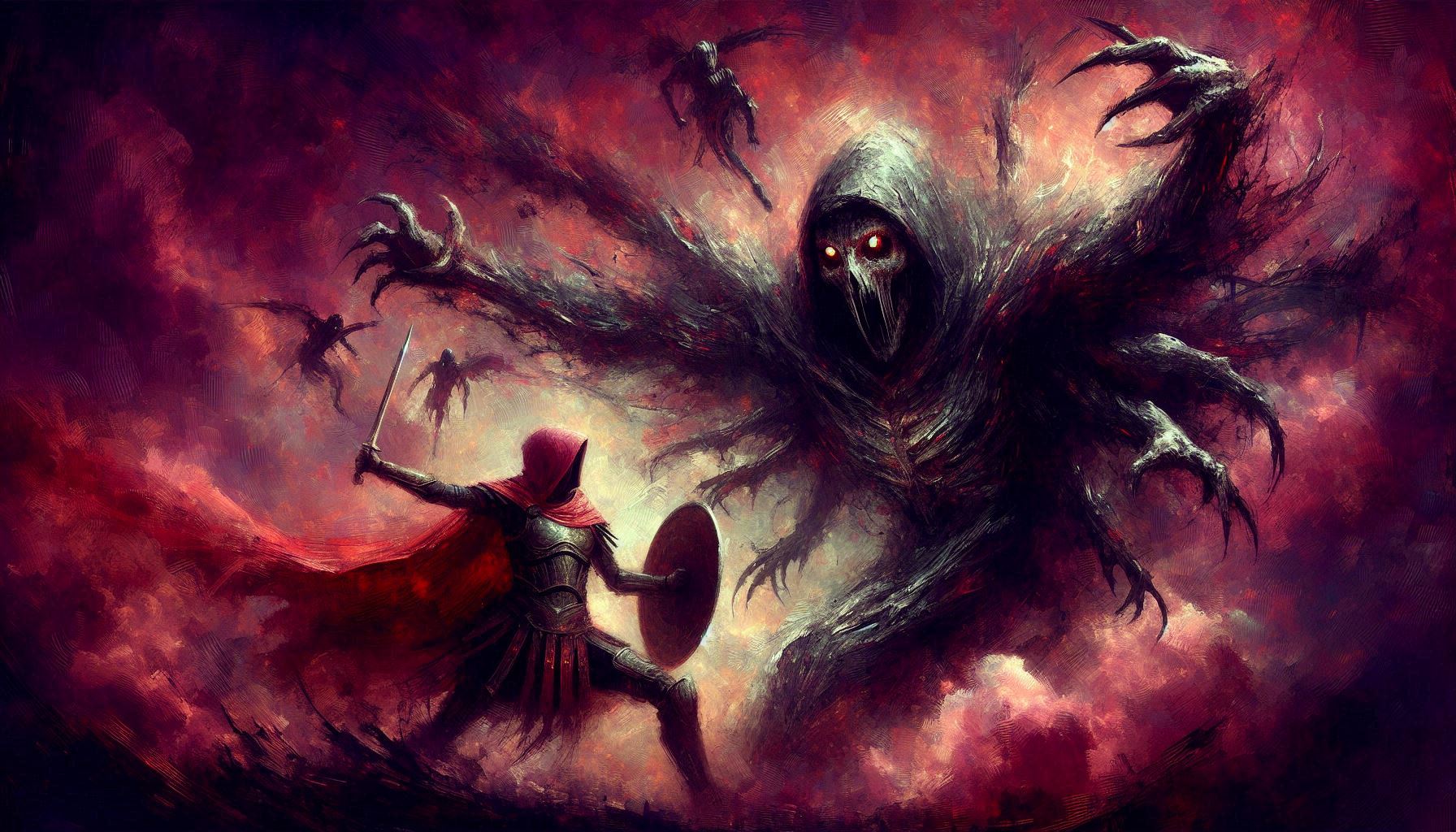 |
| Res Mythica - a player-driven, tactical, narrative RPG set in a world inspired by classical antiquity Image from Res Mythica |
[5 min read]
I recently sat down with my friend Mariano, the designer behind the up-and-coming tabletop role-playing game Res Mythica. We talk about role-playing games all the time, but this was the first time we tried capturing part of that conversation on camera. The topic for this pilot was one of the game’s signature features: the faction system.
This system is central to Res Mythica, but it’s also something Game Masters (GMs) can lift and use in other RPGs. Our chat became a blend of design philosophy, practical GM advice, and a peek into Mariano’s thinking about narrative tension and player agency.
What is Res Mythica?
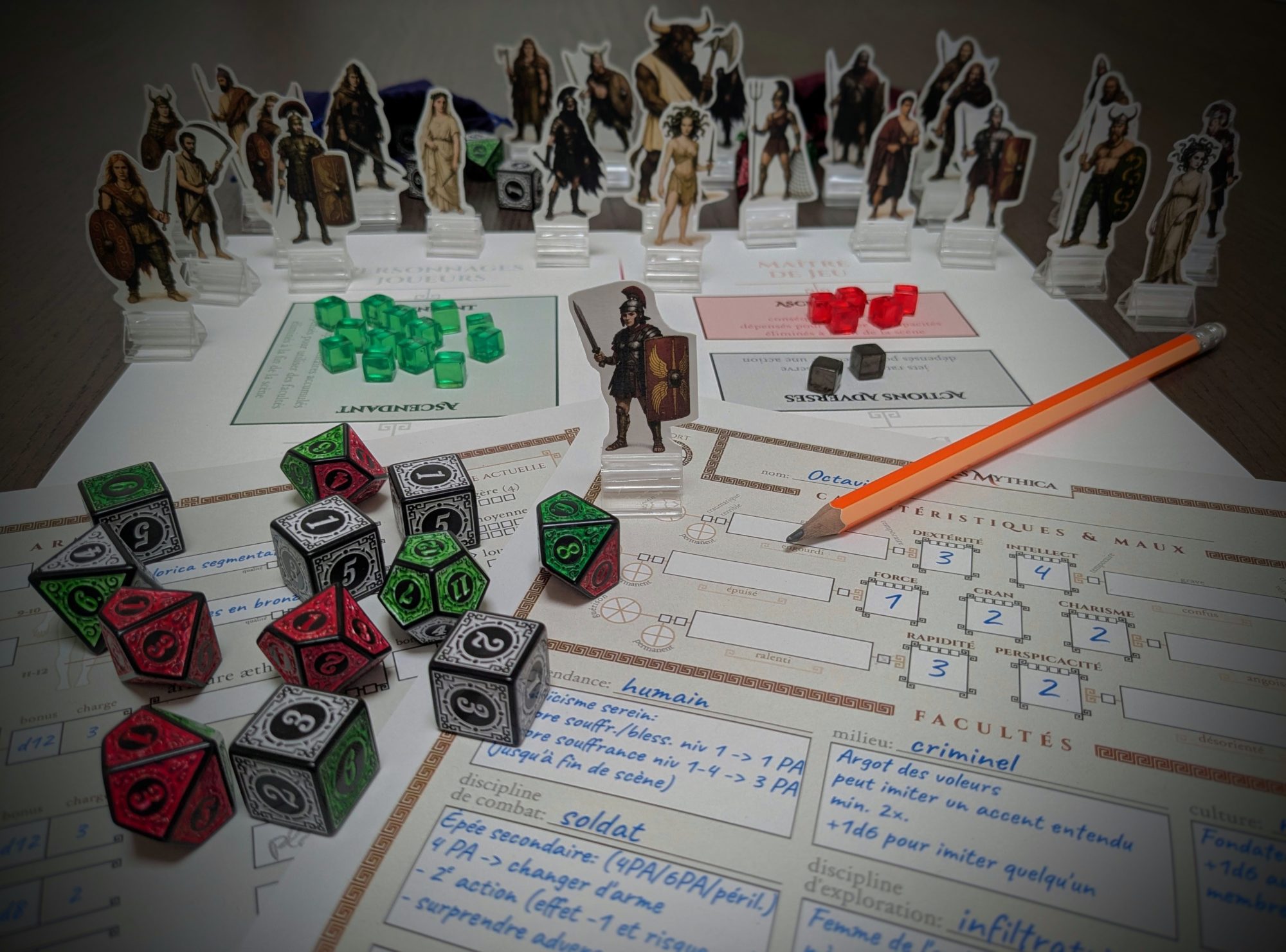
I opened by asking Mariano how he’d describe Res Mythica to someone who’s only ever played D&D.
He explained that while it shares familiar touchpoints, Res Mythica flips the usual structure. Most fantasy RPGs begin with a tactical chassis and allow role-play to emerge on top. Res Mythica goes the opposite direction: it’s designed as a narrative-first experience, then woven tightly with tactical depth so that one naturally feeds the other.
There’s no split between “the narrative part” and “the mechanics part”. Decisions in conversation matter in combat, and choices made in combat ripple back into the story.
The world of Res Mythica draws on classical antiquity. Think ancient Greek monsters, divine politics, and the dangerous intrigue of the late Roman Republic. It’s a period many people know something about, but which tabletop games haven’t fully explored.
Mariano’s fascination with that era feeds directly into the game’s tone. It’s mythic, political, and human. And the social and political structures of antiquity lend themselves naturally to… factions.
Which brings us to the heart of our conversation.
Factions for GMs:
A Simple System for Low-Prep, High-Impact Play.
Mariano describes himself as a “low-prep GM”, but not because he avoids prep. Rather, he avoids complex prep that restricts player choice. He wants his players to choose their own direction and see the consequences unfold.
The problem: when a GM builds multiple factions, each with their own agendas, the world becomes more complex than a simple A→B→C adventure path. It’s easy to drown in notes, timelines, and half-written plots.
This is what led him to create Res Mythica’s faction system.
At its core, the system is purely mechanical:
-
Each faction has a leader, a power level, assets, and a couple of active projects.
-
It takes about five minutes to set up three factions.
-
After each period of downtime (or long rest, in D&D-speak), the GM rolls for each faction to see how far its projects advance.
The GM isn’t improvising consequences in the moment. They follow a clear procedure. This means:
-
The world moves even when the players do nothing.
-
Faction actions generate constant story hooks.
-
Prep becomes lightweight because the system drives the world forward.
-
The GM isn’t “inventing pressure”, they’re resolving mechanics.
Mariano compared it to running combat. You could narrate everything freeform, but mechanics make it fair, fast, and tense. The faction system does the same thing but for the campaign layer.
He recommends starting with three factions. Two factions create a binary choice; three introduce shifting alliances, grey morality, and real decisions.
Factions for Players:
A Living World That Reacts to Their Choices
From the player’s perspective, factions are discovered through investigation during downtime. Instead of simply healing or recharging resources, players can spend downtime actions to:
-
Learn what a faction is doing
-
Discover how far a project has progressed
-
Uncover assets, weaknesses, and threats
This creates natural curiosity. Every “rest” becomes a moment where the world changes slightly. And every bit of information uncovered becomes a plot hook.
Crucially, players see the mechanics happen in front of them. When the GM rolls for faction progress, it’s visible, not secret GM-fiat. The world feels alive. The stakes feel real.
Players might gain resources back, but factions gain progress. This mirrors the pressure in films where the enemy is always one step ahead—except here, it isn’t scripted. If players take too long, factions succeed. If players intervene early, they might derail a plot before it becomes dangerous.
Mariano pointed out that many pre-written adventures ultimately funnel players to the same climactic moment no matter what choices they made. The faction system removes that safety net. Timing and decisions matter.
Above all, it creates the feeling that:
“Our actions changed the world.”
That’s the emotional core Mariano is chasing.
And I saw it work beautifully in a playtest - the players were hanging on every faction roll during their downtime, cheering loudly when the factions missed their chance to make progress.
A Quick Story (and a Very Real Villain)
As we wrapped up, our conversation drifted to playtesting. Res Mythica is deep into alpha right now, with heavy ongoing testing. Mariano insists on only giving players tools that have been repeatedly tried and refined.
I mentioned that I’m eager for our next session—whenever we can finally defeat scheduling.
The scheduling monster claims another victim.

Where to Get the Faction System
Signs up to the mailing list to be the first to know when Factions and other materials become available at:
And stay tuned here for more updates from me as the project moves toward its next major milestone.
Dashmeister
This blog is written by me, with a little help from AI editing for clarity and tone. All ideas, feelings, and memories are mine.


